Meta Just Became an AI Company — Not a Social Media Company
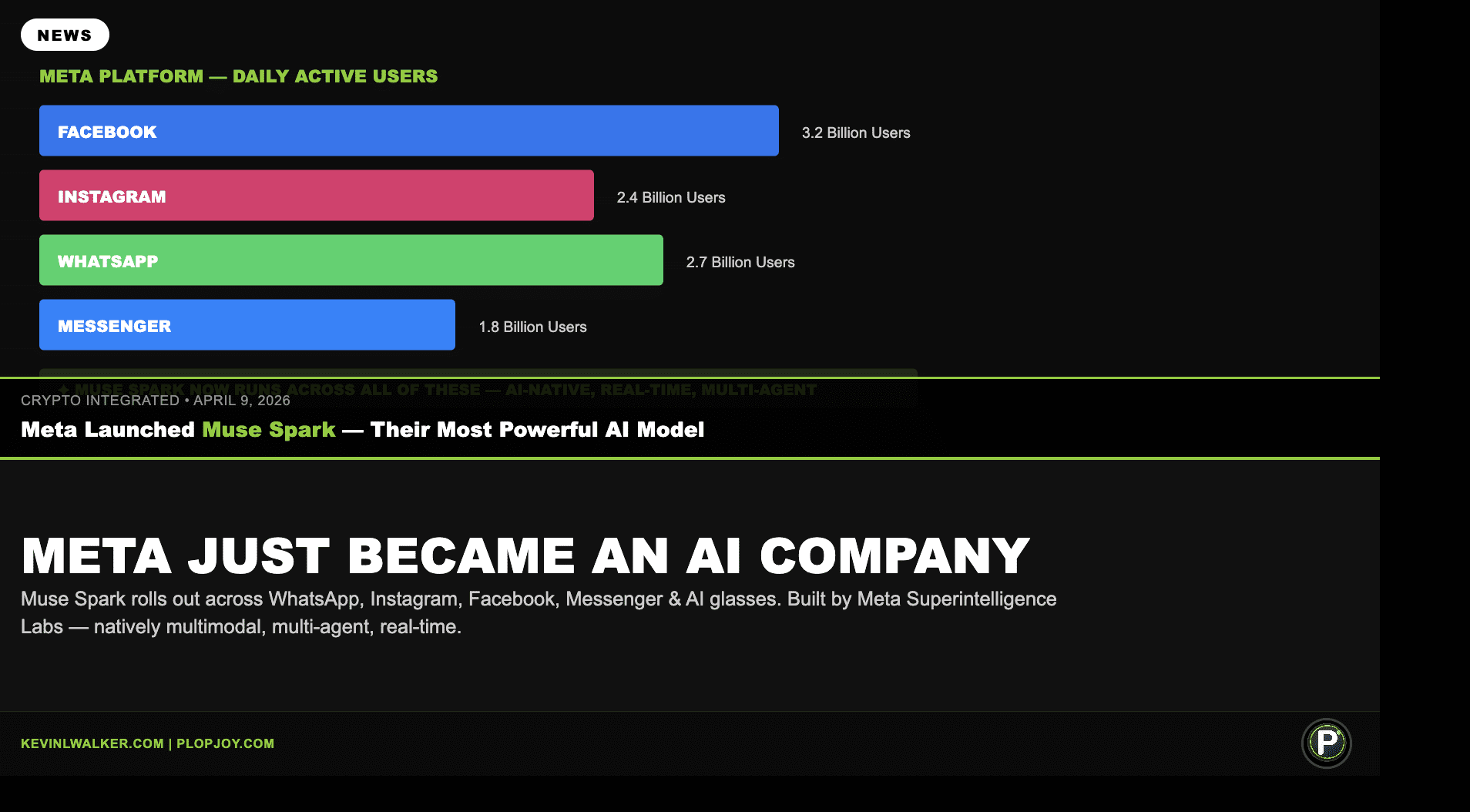
Meta launched Muse Spark — their most powerful AI model to date. It’s rolling out across WhatsApp, Instagram, Facebook, Messenger, and Meta AI glasses over the coming weeks. Built by Meta Superintelligence Labs, Muse Spark is natively multimodal — it can see, reason, use tools, and coordinate with other AI agents in real time.
This isn’t a chatbot update. This is the moment Meta officially stopped being a social media company and became an AI infrastructure platform. There is a material difference between those two things — and the gap between operators who understand it and those who don’t is about to become expensive.
“The platform you’ve been posting on for 10 years just became the world’s largest AI deployment network. That changes what it means to operate on it.”
Why This Is an Early Mover Signal
In 2014, I was on Vine before brands paid creators. In 2013, I was in crowdfunded streaming before Netflix went original. I’ve watched this exact pattern repeat across 8 markets over 13 years. Every time a massive platform makes an infrastructure-level shift, there is a window — typically 6 to 18 months — where operators who recognize the shift can build on top of it before the crowd arrives.
Meta has over 3 billion daily active users. Muse Spark now runs underneath every product they own. The people who understand what that means and start building their content, systems, and digital infrastructure around an AI-native Meta platform will have a structural advantage that late movers simply cannot buy their way into.
What This Actually Means for Operators
Facebook is now an AI-assisted publishing platform. Instagram is now an AI-assisted visual commerce layer. WhatsApp is now an AI-assisted communication and transaction infrastructure. The businesses treating these as social media posting apps are already operating in the wrong frame.
The early move is straightforward. Recognize that the rules of the platform changed. Adjust your systems — content strategy, automations, customer touchpoints, digital infrastructure — before the crowd does. The window is measured in months, not years.
The Pattern Recognition Moment
I bought Bitcoin at $920 in 2016. I bought Cardano at $0.03 before the altcoin run. None of those were luck. All of them were the same pattern — a massive infrastructure shift happening in plain sight while the majority was still debating whether it was real. By the time it was obvious, the best positions were already occupied.
Muse Spark is not a future event. It is a present one. The Walker Window is open. The question is whether you’re moving or watching.